Insider Daily, Smart City
Alba Iulia is building an AI virtual civil servant for 19 administrative processes. 83% of tax payments are already cashless
Mayor Gabriel Pleșa's report two years into his term shows what a small city that keeps investing in digitalisation looks like: kiosk payments, video-checked parking and LED lighting with remote management.
Pe scurt
- The AVIS project, worth 2.5 million lei, automates 19 administrative processes with a virtual civil servant
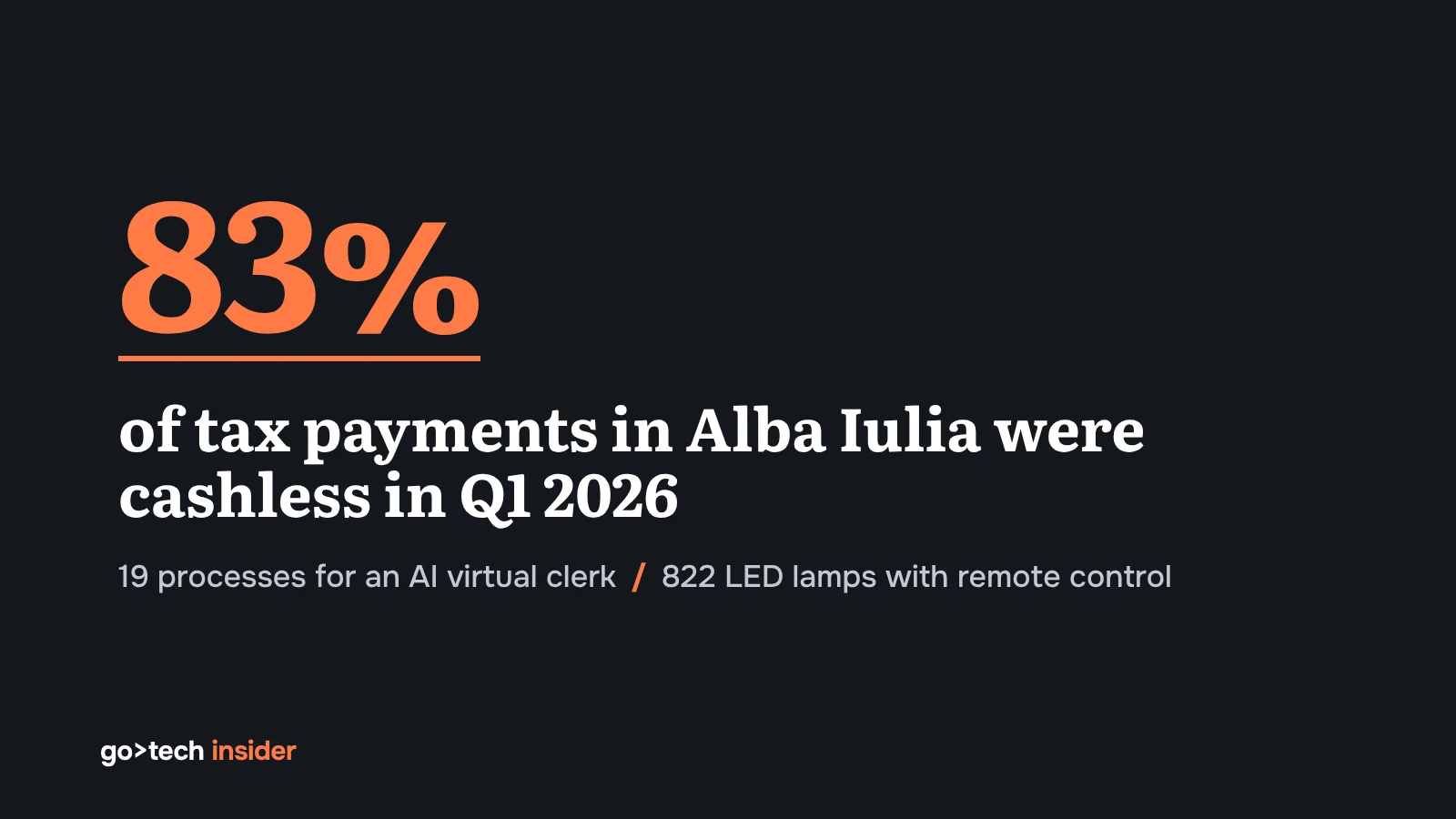
- In the first quarter of 2026, 83% of tax payments were cashless
- Upgraded lighting with remote management should cut consumption by more than 77% in the areas covered
The mayor of Alba Iulia, Gabriel Pleșa, published on November 3 his report two years into his second term. The document shows a steady push on digitalisation in a city long seen as one of Romania's smart city pioneers.
The newest project is called AVIS and creates a virtual civil servant based on artificial intelligence, meant to automate 19 administrative processes. The project is worth 2.5 million lei, of which about 1.75 million is non-refundable, runs together with the commune of Sântimbru and has a deadline of May 7, 2028.
Payments have already moved to digital. In the first quarter of 2026, 83% of tax and fee payments were cashless, and about 55% of collections went through alternative channels, SelfPay kiosks and the app. The city has also installed a video system that detects unpaid parking, costing more than 430,000 lei, and residents get a message 30 days before their permit expires.
On lighting, two projects worth 8 million lei, funded by the Environment Fund Administration, added 822 LED lamps with remote management. The report estimates consumption will fall by more than 77% in the upgraded areas. A solar park of at least 3 MW, with 5,122 panels, is more than 90% complete and will power eight public buildings and street lighting from March 2027. On transport, two recovery plan projects worth 78.4 million lei brought 21 electric buses, 6 minibuses and 34 charging stations.
De ce contează
Alba Iulia shows that a medium-sized city can digitalise services step by step, with small projects and different funding sources, without a mega-contract. For solution providers, cities like this are faster and more predictable customers than the large municipalities.
Unghiul Insider
The really interesting figure is not the virtual civil servant, which does not exist yet, but the 83% of cashless payments. That is the infrastructure that makes a virtual civil servant possible: clean data and residents used to dealing with City Hall on their phones. Cities that skip this step and buy AI directly will end up with a chatbot with no data behind it.
Surse
- Alba24, raportul primarului Gabriel Pleșa, 3 Nov 2026