Insider Daily, Bani și investiții
IT Genetics grows 15% in the third quarter but says its 2026 budget is unlikely to be met
The digital automation company reports revenue of 76.1 million lei for nine months and a 1.1 million lei loss. Spain, Italy and logistics drive growth while the home market drags.
Pe scurt
- Q3 revenue of 28.8 million lei, the best quarter of the year
- Nine-month net loss of 1.1 million lei, against a profit last year
- Since November 20, the shares trade on the BVB's new Growth Market
IT Genetics (BVB: ITG) reported on November 20 consolidated operating revenue of 76.1 million lei for the first nine months of 2026, up 4% year on year. EBITDA fell to 1.2 million lei from 2.2 million, and the net result was a loss of 1.1 million lei, compared with a profit of 0.5 million.
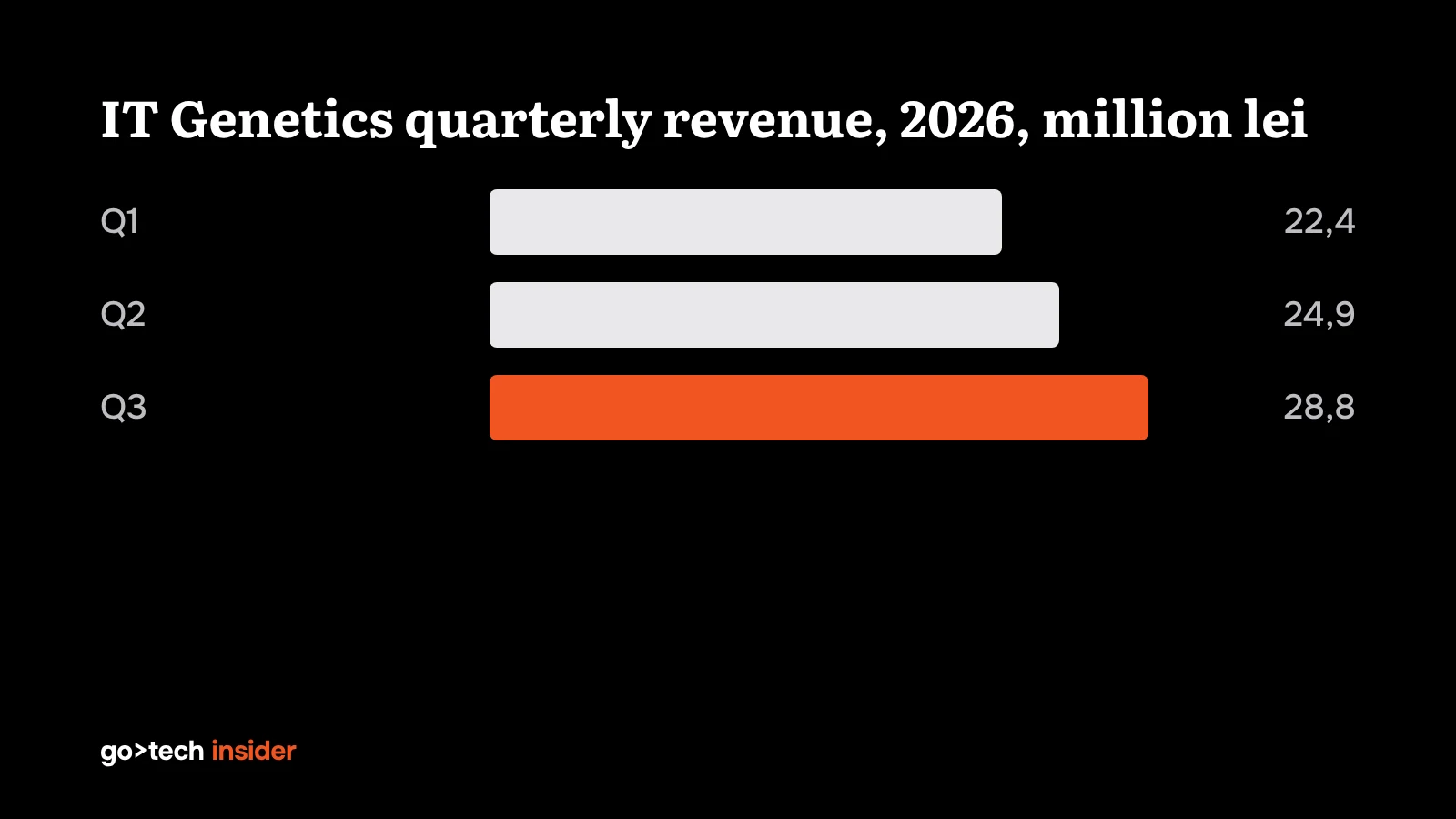
The third quarter was the first of the year with revenue growth: 28.8 million lei, up 15%. Several large projects were delivered at low margins, however, and the gross margin on goods sold fell to about 25%, from about 29% in the first half.
Co-founders Liviu Sima and Ștefan Axinte say Romania, the company's main market, had a difficult nine months, with weaker activity in retail, manufacturing and hospitality. The transport and logistics vertical nearly tripled (up 188%), and the company signed its first Hardware as a Service contract. Abroad, revenue grew about 32% in Spain and about 33% in Italy.
Management says reaching the budget revised in September is unlikely and that it will focus on cost discipline. September brought the first signs of recovery, according to the company. Since November 20, ITG has been one of the 23 issuers on the BVB's new SME Growth Market.
De ce contează
IT Genetics sells equipment and software that automate shops, warehouses and factories. Its results are an early indicator of how much Romanian companies are investing in digitising operations, and right now the signal is cautious.
Unghiul Insider
The company does exactly what investors need to hear: it admits the budget will be missed. Growth in logistics and exports shows the model works where customers are investing. The problem is margin, not demand.