Analiza Insider, Smart City
Romania has 1,576 smart city and smart village projects worth over 13 billion euros. The problem is they do not talk to each other
Eduard Dumitrașcu, president of the Romanian Association for Smart City, says institutions do not communicate and some of the 2024-2026 digitalisation projects no longer reflect reality.
Pe scurt
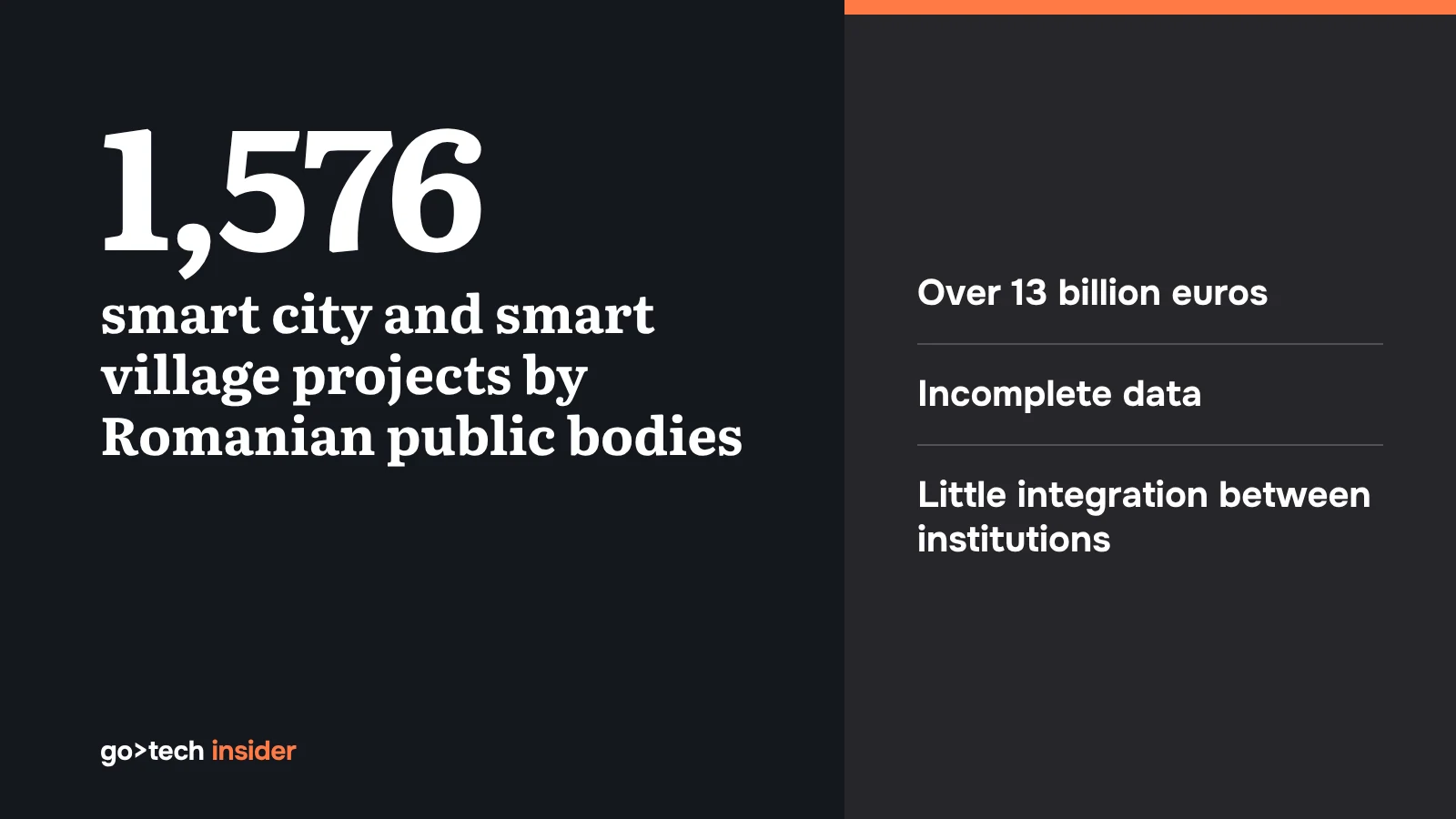
- 1,576 projects and initiatives by public bodies, worth over 13 billion euros combined
- The figures are incomplete because data is hard to get from authorities
- The association calls for integration: a body that knows what happens on the ground, not just on paper
Public bodies in Romania have 1,576 smart city and smart village projects and initiatives, with a combined value of more than 13 billion euros. The figure was presented by Eduard Dumitrașcu, president of the Romanian Association for Smart City (ARSC), at the "Digitalisation and Cybersecurity" conference organised by the newspaper BURSA.
Dumitrașcu said the data is incomplete because the association finds it hard to collect it from authorities. The figures cover only public bodies, not private projects.
His main diagnosis is fragmentation. Many projects and funding sources, including those of local authorities, do not communicate with each other, and central authorities are not aware of them. Romania needs integration capacity within and between institutions, he said, and could use the regional development agencies or a new body to manage what happens in "real Romania", not just in public policy or funding guides.
Dumitrașcu also said that some of the digitalisation projects from 2024-2026 no longer reflect reality and that, in some areas, people's skills should be built before digitalisation. The association wants Romania to become a regional smart city hub.
De ce contează
13 billion euros is a large market for integrators, telecom operators and software makers. But the fragmentation the association describes means each project is sold separately, with no common standards and no reuse, which raises costs for taxpayers and risk for suppliers.
Unghiul Insider
A public map of these 1,576 projects, with status, value and supplier, would do more for integration than any new strategy. The data exists, scattered across SEAP, TED and city hall reports. Whoever puts it together first will have the best sales tool on the market.