Digitalizare în practică, Smart Home
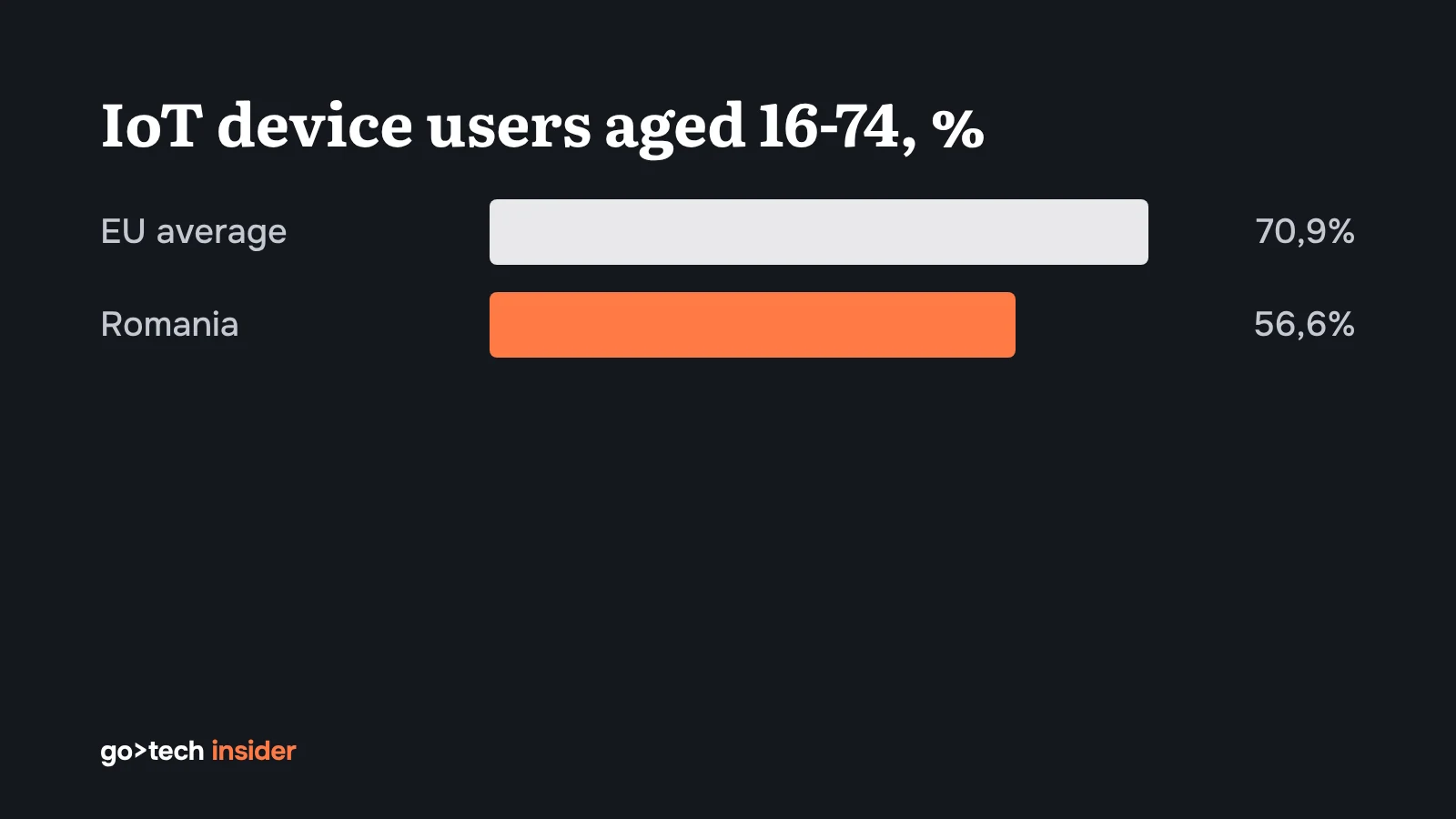
The smart home in Romania: 56.6% of adults use connected devices, below the EU average. Public projects show what works
Eurostat data puts Romania 14 points below the European average. Meanwhile, recovery plan projects are automating social housing and social service buildings with KNX.
Pe scurt
- 56.6% of Romanians aged 16-74 used IoT devices, against an EU average of 70.9%
- In Pucioasa, 48 recovery plan homes have lighting and heat pumps controlled through KNX
- Buildings account for about 40% of Romania's final energy use
In Romania, 56.6% of people aged 16-74 used internet-connected devices other than phones and computers in the three months before Eurostat's 2024 survey. The EU average was 70.9%. Across Europe, 14.2% used connected energy management systems, 12.8% smart appliances and 11.8% smart home security devices.
The economic argument is about energy. Buildings account for about 40% of Romania's final energy consumption, according to the European Commission. Statista estimates global revenue of $159.5 billion in 2026 from smart home devices sold to consumers.
Some of the clearest examples come from public projects. In Pucioasa, Dâmbovița county, a completed recovery plan project automated 48 homes, 21 apartments and 27 studios, with a wireless KNX system: lighting and heat pumps are controlled centrally, and tenants have a phone app. In Corabia, the Sf. Elena social services complex run by Olt county's child protection agency has automated lighting and 33 fan coil units, with 20 presence sensors: after ten minutes without presence, climate control goes to standby, and after 30 minutes the lights go off.
Both projects were carried out by the Constanța firm KNX Smart Home. Its founder, Emil Eremia, an engineer with more than 20 years in automation, says he does not promise savings percentages because results depend on the building and how it is used. "If you need five apps to do simple things, automation has missed its purpose," he said in an interview with Wall-Street.ro.
De ce contează
The 14-point gap to the EU average is a market still unclaimed. Public housing and social building projects show that automation sells most easily as a tool for energy efficiency and management, not as a gadget.
Unghiul Insider
The healthiest stance in the interview is the refusal to promise savings percentages. Romania's smart home market has been damaged for years by promises of 30-40% savings without measurement. Whoever starts selling on real data, measured before and after, will win the trust of architects and developers.