Digitalizare în practică, Smart City
August's energy alert showed which cities have smart lighting: Tulcea cut use by 53% without switching off streets
Some city halls partly switched off street lighting. Cities with LED and remote management could simply lower the intensity, remotely, by time slot.
Pe scurt
- Authorities declared a national energy alert for the month of August
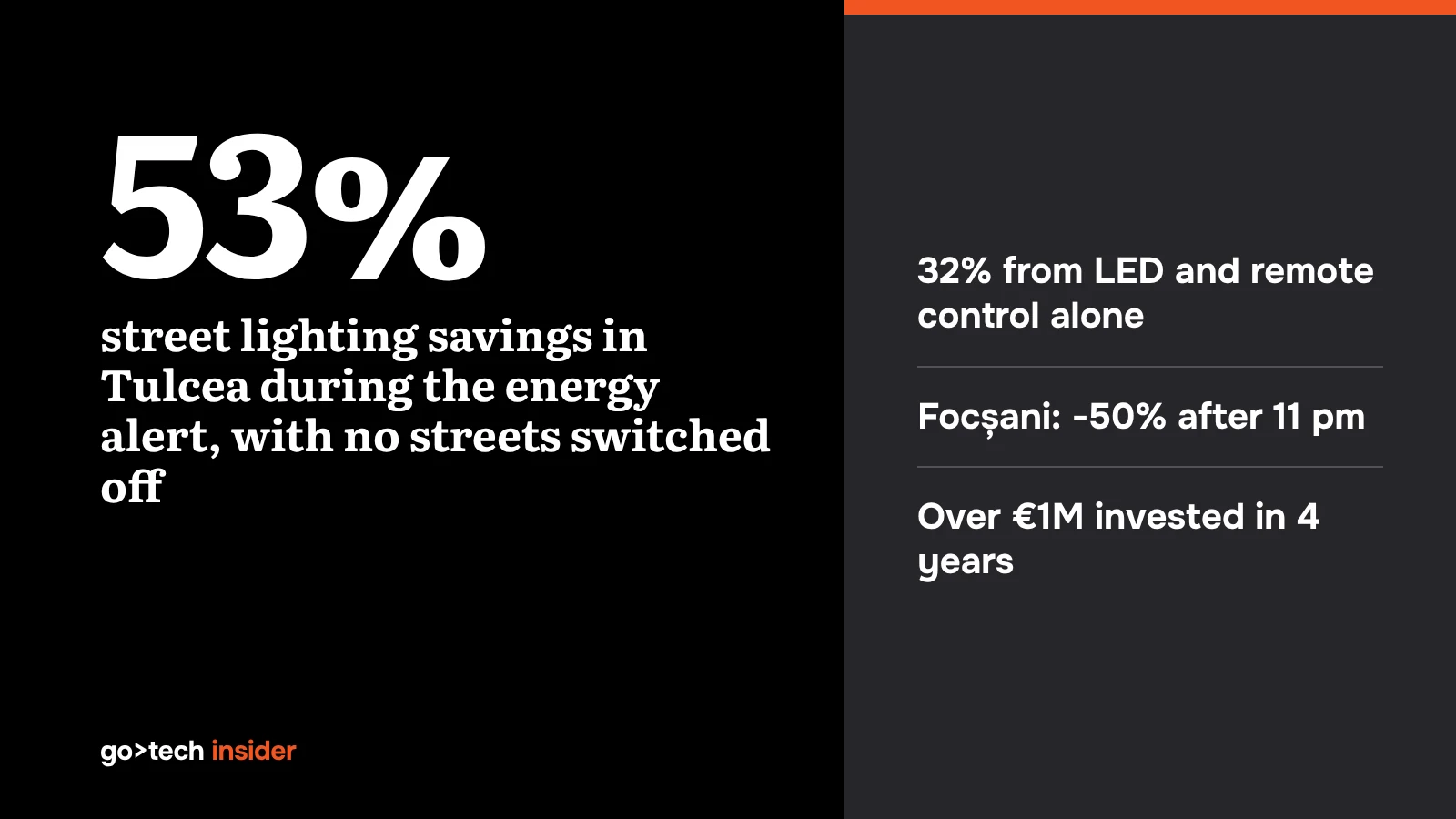
- Tulcea reached savings of about 53% on street lighting without switching off any street
- Focșani cut lighting intensity by 50% after 11 pm in upgraded areas
On July 31, Romanian authorities declared a national alert for the month of August because electricity output had fallen amid drought and low river levels, especially on the Danube. City halls were asked to cut consumption, and street lighting was among the first targets.
The difference between cities showed immediately. Tulcea City Hall announced on August 4 that it would not reduce the number of lighting hours but the intensity of the light at peak times, using its remote management system. Total savings reach about 53%. Mayor Ștefan Ilie said the city had invested more than one million euros over four years in LED and remote management, which had already saved 15,000 kWh a month, or 32%. "We will not switch off street lighting, we adjust it," he said.
In Focșani, the local emergency committee also decided on August 4 to cut the intensity of upgraded street lighting by 50% every day after 11 pm. Arad reduced street lighting intensity and suspended architectural lighting, and Timișoara temporarily turned off the architectural lighting of landmark buildings. In other places, lighting was partly interrupted.
Remote management means each light fitting can be controlled remotely, and intensity can be scheduled by area and by hour.
De ce contează
The August crisis turned an efficiency investment into a resilience investment. Cities with remote management could cut consumption without leaving streets dark, with direct effects on safety and on how the administration is seen.
Unghiul Insider
The difference between dimming and switching off is exactly the argument smart city suppliers have not sold well so far. Energy savings struggle to convince a local council. The safety of a lit street in the middle of a crisis convinces at once.